


Battersea Park is one of the earliest Municipal Parks in London, first proposed in 1844. James Pennethorne created a design which was further developed by John Gibson, working for the Metropolitan Board of Works.
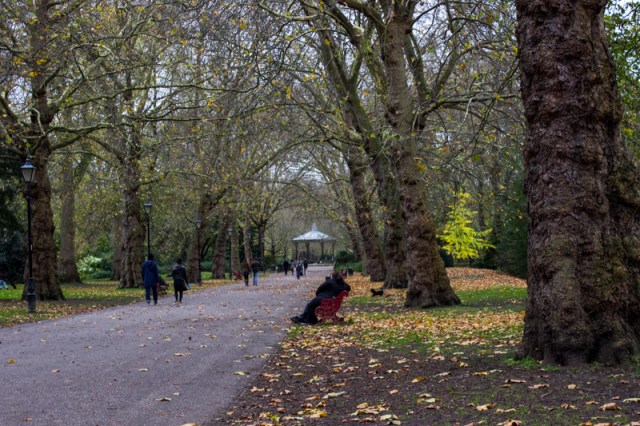
The marshy ground was filled in and landscaped with material excavated from the Surrey Docks, and the Park opened to the public in 1854, with an official opening by Queen Victoria in 1858, after the Chelsea Bridge had opened. The Park was landscaped with carriage drives, trees, walks, and displays of flowers.




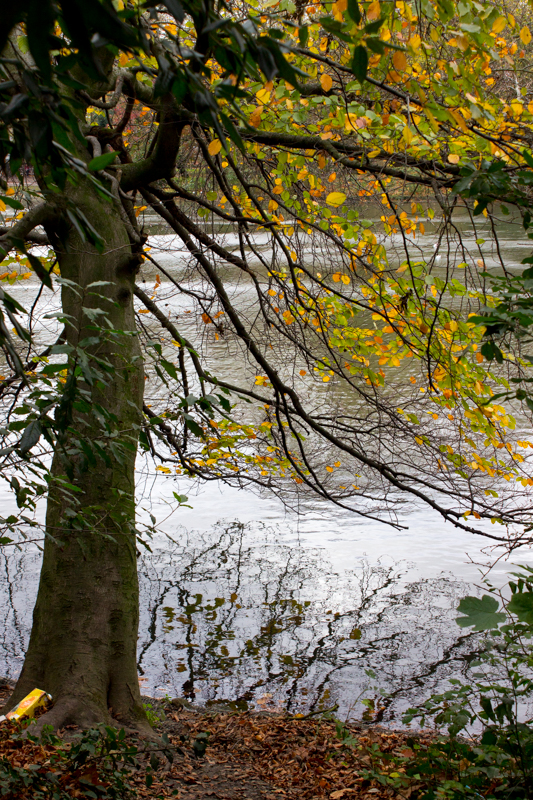
A winding lake encourages birds and creates tranquillity – there are plenty of quiet corners corners where you could be in the countryside – not the centre of a major capital city. Rock features and cascades were created and a Pump House (now an art gallery) ensured the water flowed and circulated.


Figures by Henry Moore, set up in 1950, are hidden in the lake area.

A sub-tropical garden was laid out in 1863-64 and restored in 2004. The gardens looked rather sad and not sub-tropical on this grey day – I need to return in the summer.

The London Peace Pagoda was built in 1984-85 by the monks and nuns of the Nipponzan Myohoji Buddhist Order from Japan. The founder of the sect, The Most Venerable Nichidatsu Fujii, was committed to peace, pacifism, and international disarmament, and the peace pagodas which his order built around the world are intended to focus attention on that aim.


You may be interested in
Battersea Park history
The Peace Pagoda
The Great Trees of London